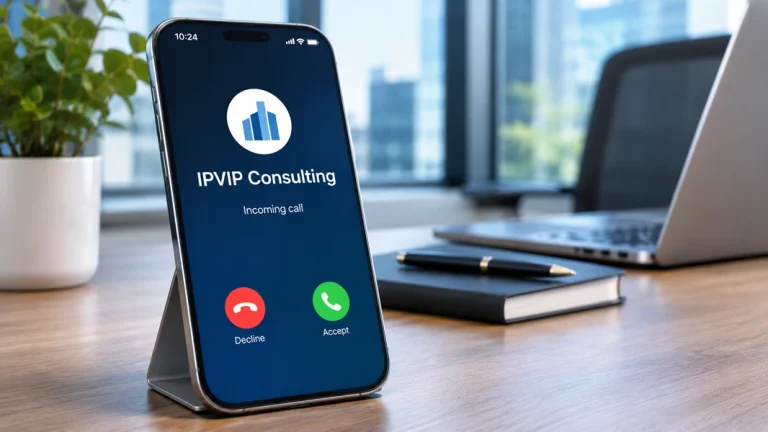

The new commercial numbering It presents a new scenario for companies that use the call as a communication channel. This measure seeks to provide greater transparency and allow the user to identify when they receive a call for commercial purposes.
However, there is a question that goes beyond mere identification: What happens when the user recognizes that it is a commercial call? Will they decide to answer it or reject it before listening to the reason?
Because identifying a call is only the first step. The real challenge for companies will be to build enough trust for the customer to respond.
The new commercial numbering 400: more transparency for the user
The goal of the new numbering system is clear: that people can easily distinguish a commercial call from other types of communications.
From the consumer's perspective, this measure can provide more information and facilitate a more conscious management of the calls received.
But for companies that use the phone as a channel of communication with their customers, a new challenge arises: maintain the ability to contact without the caller’s identification reducing the chances of a response.
Industries such as insurance, telecommunications, banking, professional services or customer service depend heavily on the call as a means of interaction.
For them, value lies not only in being able to make a call, but in having that call answered.
The new challenge: moving from making calls to having conversations
For years, many companies have measured the success of their telephone campaigns by the number of calls made. However, the new scenario changes the priority: it’s not enough to make contact; you must ensure that the communication is answered.
The important metric is no longer solely how many calls can be made, but how many people decide to answer.
A call is more likely to be answered when:
- The user recognizes who is calling.
- He understands the reason for the contact.
- It conveys confidence.
- It doesn't feel like an unexpected communication.
The new challenge for companies will be to work on all these elements before the phone even starts ringing.
Identifying a call does not always guarantee that it will be answered
The experience of other markets shows an important reality: the fact that a commercial call is recognizable does not necessarily mean that the user will respond.
When a communication is identifiable, With this, the user can make more conscious decisions, but they can also learn to filter it out if they do not perceive a clear reason or sufficient trust.
Therefore, the solution cannot be limited to displaying a different number on the screen.
The key will be building a communication experience that provides context, transparency, and trust before even starting the conversation.
The goal should not be solely:
“This call complies with the regulations.”.
The goal should be:
“This call complies with the regulations and the customer understands why they are receiving the contact.”.
How companies can prepare for the new scenario of sales calls
Adapting to this new scenario requires a more comprehensive strategy than simply changing the numbering used.
These are some of the key factors that can make a difference:
1. Warn before making the call
An unexpected call generates more rejection. Therefore, a good alternative is to use previous channels such as SMS or RCS to anticipate contact:
“Hello, Carlos. From Your company We will call you in the next few minutes to help you improve the security and connectivity of your company’s communications.”
This small gesture completely changes the perception.
The user stops receiving an unknown call and waits for a communication that has a context.
2. Personalize the call to generate trust
The phone screen becomes the first point of contact with the customer.
It is not the same thing to receive a call from an unknown number as to view the information associated with a company.
The customization of calls It allows you to display identifying elements such as:
- Name of the company.
- Logo.
- Reason for the contact.
- Additional information when the available technology allows it.
The call becomes less anonymous and starts to become part of a brand experience.
3. Managing numbering correctly
The Numbering 400 It should not be understood solely as a new prefix.
Behind this there is a technical and regulatory management that requires planning:
- Appropriate selection of the numbering.
- Correct configuration.
- Adaptation to the criteria established by the regulatory bodies.
- Responsible use according to the purpose of the call.
Proper management allows us to avoid problems and take advantage of all the opportunities offered by this new scenario.
4. Integrating technology and communication strategy
Increasing the chances that a call will be answered does not depend on a single tool.
It is the combination of different elements:
- SMS/RCS prior to the call.
- Recognition of the origin of the so-called
- Corporate identification of communications
- Professional management of numbering.
- Regulatory compliance.
When all these pieces work together, the call no longer becomes an interruption and becomes an expected communication.

The future of call-only advertising lies in building trust
The Numbering 400 It will change the way commercial calls appear on mobile devices.
But the real change will not be solely in the number that appears on the screen, but in everything that happens before the user decides to respond.
Companies will have to adapt to a new scenario where transparency and trust will be fundamental elements.
In IPVIP Consulting We work on solutions oriented towards this new model of communication:
- SMS and RCS automation before the call.
- Customization and identification of calls
- Consulting and management of numbering.
- Adaptation to applicable regulations.
- Solutions aimed at increasing user response
Because the challenge of the new 400 numbering system will not only be being able to make calls.
It will be about getting the customer to want to answer.
Is your company prepared for the new scenario of call-center operations? Talk to our team of experts y Discover how to improve the experience of your telephone communications.
Tell us what you thought of this article. Rate it (FROM 1 TO 5 STARS).